

A Science-Backed Evening Wind-Down Routine (Step-by-Step Timeline)
Good sleep starts hours before bed. This timeline turns the best-supported sleep habits into a routine you can follow tonight.

Quick answer
A good wind-down routine starts about six hours before bed. Stop caffeine 6 hours before, finish large meals and alcohol about 3 hours before, take a warm bath or shower 1 to 2 hours before, dim lights and put screens away about 1 hour before, then spend the last 30 minutes on something calm. Keep the bedroom cool, dark and quiet, and wake at the same time every day.
Most sleep advice is a list of rules. A routine works better because it turns those rules into a sequence you repeat at the same time each night. Here is a timeline based on the sleep research, counted back from the time you want to be asleep.
The wind-down timeline
| Time before bed | Step | Why |
|---|---|---|
| 6+ hours | Last caffeine | Caffeine 6 hours before bed still cut sleep by over an hour in a lab study |
| 3 hours | Finish large meals and alcohol | Heavy meals and alcohol close to bed are linked with poorer sleep |
| 1 to 2 hours | Warm bath or shower | Associated with falling asleep about 10 minutes faster on average |
| 1 hour | Dim lights, screens away | Bright and screen light in the evening can delay your body's sleep signals |
| 30 minutes | Calm activity and tomorrow's list | Reduces stimulation and offloads worries |
| Lights out | Cool, dark, quiet room | A comfortable environment supports staying asleep |
| Morning | Same wake time every day | Anchors your body clock, including on weekends |
Step 1: Set your caffeine cut-off (6+ hours before bed)
Caffeine stays active for hours. In a study where people took 400mg of caffeine at bedtime, 3 hours before or 6 hours before, all three timings disrupted sleep. The 6-hour dose still cut objectively measured sleep by more than an hour, even though participants did not notice it (Drake et al., 2013). If you sleep at 10:30pm, aim for your last coffee by about 4:30pm, and earlier if you are sensitive. Remember tea, energy drinks, pre-workout products and chocolate.
Step 2: Finish big meals and alcohol (about 3 hours before)
Sleep guidance from the US Centers for Disease Control and Prevention advises avoiding large meals and alcohol before bedtime. Alcohol can make you feel drowsy but tends to fragment sleep later in the night. If you are hungry later, a small, light snack is fine.
Step 3: Warm bath or shower (1 to 2 hours before)
It sounds backwards, but warming up helps you cool down. After a warm bath, blood flow to the hands and feet increases and core body temperature drops, which is one of the body's signals for sleep. A 2019 review of 17 studies found that a warm bath or shower 1 to 2 hours before bed, in water around 104 to 109°F (40 to 43°C), was associated with falling asleep about 10 minutes faster on average (Haghayegh et al., 2019). A bath right before bed did not show the same benefit.
Step 4: Dim the lights and put screens away (1 hour before)
Light is the strongest signal to your body clock. In one study, reading on a light-emitting e-reader before bed, compared with a printed book, delayed the evening rise in melatonin, made it take longer to fall asleep and left people less alert the next morning (Chang et al., 2015). Switch to lamps or warm, low lighting. Charge your phone outside the bedroom if you can.
Step 5: Do something calm (last 30 minutes)
Pick one or two low-effort activities and keep them the same each night, so they become a cue for sleep:
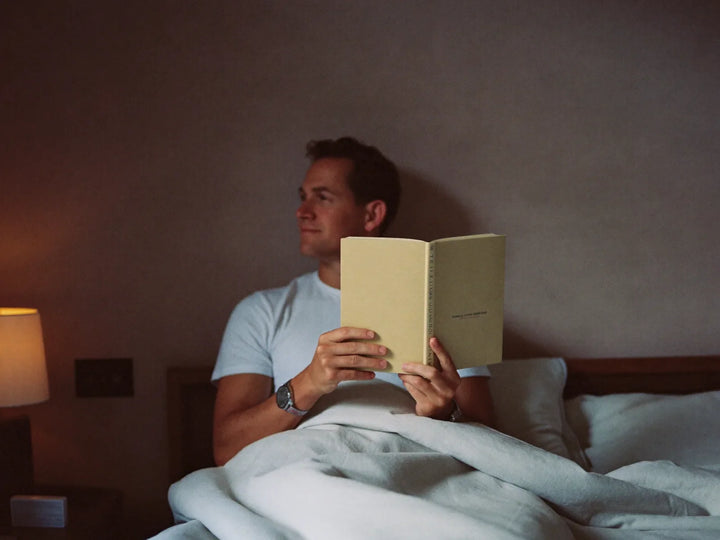
- Read a paper book under a low lamp.
- Gentle stretching or slow breathing, for example breathing out for longer than you breathe in.
- Write tomorrow's to-do list. It moves open tasks out of your head and onto paper.
- Prepare the morning: lay out clothes, fill a water bottle.
Step 6: Set up the room
A cool, dark, quiet bedroom supports sleep. Use blackout curtains or an eye mask, earplugs or steady background noise, and bedding that keeps you from overheating. Keep the bed for sleep, so your brain links it with sleeping rather than scrolling or working.
Step 7: Wake at the same time every day
A consistent wake time is the anchor of the whole routine, including weekends. Get daylight soon after waking if you can. It helps set the clock that will make you sleepy at the right time tonight. Adults are advised to aim for at least 7 hours of sleep a night.
Where magnesium fits
Some people take their magnesium supplement in the evening as part of this routine, simply because it is an easy time to remember. Magnesium contributes to normal muscle and nervous system function, but the research on magnesium supplements and sleep is limited, and Alurevia Magnesium Complex is not a sleep aid. For what the studies do and do not show, see magnesium and sleep. If you want help making any evening step automatic, see habit stacking.
90-DAY SUPPLY · SUBSCRIBE & SAVE 10%
- $35.00 one-time purchase
- $31.50 every 3 months with Subscribe & Save
- One capsule per day, 90 capsules per bottle
- Pause, skip or cancel anytime
When to get help
If you regularly struggle to fall or stay asleep for several weeks, snore loudly, stop breathing during sleep, or feel very sleepy during the day despite enough time in bed, speak with a healthcare professional. Conditions such as insomnia and sleep apnoea are common and treatable.
Frequently asked questions
What is a good wind-down routine before bed?
Stop caffeine about 6 hours before bed, finish large meals and alcohol about 3 hours before, take a warm bath or shower 1 to 2 hours before, dim lights and put screens away 1 hour before, and spend the last 30 minutes on something calm. Keep the same wake time every day.
How long before bed should I stop using my phone?
About an hour is a practical target. Evening light from screens can delay the body's sleep signals, and phone content keeps your brain engaged.
Does a hot shower before bed help you sleep?
A warm bath or shower 1 to 2 hours before bed has been associated with falling asleep around 10 minutes faster on average. Right before bed, the effect appears smaller.
When should I stop drinking coffee for better sleep?
At least 6 hours before bedtime, and earlier if you are sensitive to caffeine.
How long does it take a new bedtime routine to work?
Some changes, such as cutting late caffeine, can help within days. A routine usually feels automatic only after several weeks of repetition, so keep the steps simple enough to do every night.
Sources
Drake C, et al. Caffeine effects on sleep taken 0, 3, or 6 hours before going to bed. Journal of Clinical Sleep Medicine, 2013. Haghayegh S, et al. Before-bedtime passive body heating by warm shower or bath to improve sleep. Sleep Medicine Reviews, 2019. Chang AM, et al. Evening use of light-emitting eReaders negatively affects sleep, circadian timing, and next-morning alertness. PNAS, 2015. Centers for Disease Control and Prevention: About Sleep.
This article is general education and is not medical advice. These statements have not been evaluated by the Food and Drug Administration. This product is not intended to diagnose, treat, cure, or prevent any disease. Speak with a healthcare professional for individual guidance.