

How Much Magnesium Per Day? RDA, Supplements & Upper Limit Explained
Learn the adult magnesium intake recommendations, the difference between dietary magnesium and supplemental magnesium, and why the 350mg supplemental upper limit matters.

Daily magnesium needs depend on age, sex and life stage, and the recommended intake is not the same thing as the upper limit for magnesium from supplements. That distinction matters when reading magnesium labels.
What is the recommended daily amount of magnesium?
According to the NIH Office of Dietary Supplements, recommended dietary allowances for adults generally range from 310 to 420mg per day, depending on age and sex. Pregnancy and lactation change the recommended intake; the table below gives the figures by life stage.
These recommendations refer to total magnesium intake from food, beverages and supplements combined.
Recommended dietary allowance by age and sex
The figures below are the adult RDAs published by the NIH Office of Dietary Supplements, in milligrams per day.
| Life stage | Male | Female |
|---|---|---|
| 14–18 years | 410mg | 360mg |
| 19–30 years | 400mg | 310mg |
| 31–50 years | 420mg | 320mg |
| 51+ years | 420mg | 320mg |
| Pregnancy, 19–30 years | n/a | 350mg |
| Pregnancy, 31–50 years | n/a | 360mg |
| Lactation, 19–30 years | n/a | 310mg |
| Lactation, 31–50 years | n/a | 320mg |
Note that the highest adult RDA, 420mg, is the same figure used as the Daily Value on US Supplement Facts panels. That is why a %DV on a label is calculated against 420mg.
What is the upper limit for magnesium from supplements?
The Food and Nutrition Board sets a tolerable upper intake level of 350mg per day for supplemental magnesium in adults. This upper limit applies to magnesium from dietary supplements and medications, not magnesium naturally present in food.
The limit is primarily based on gastrointestinal effects such as diarrhea that become more common as supplemental intake rises.
Two numbers that are easy to confuse
It is worth separating these clearly, because they measure different things and are often quoted interchangeably online.
- The RDA (310–420mg) describes how much magnesium you should get in total, counting food first.
- The upper limit (350mg) describes how much you should not routinely exceed from supplements and medications alone.
The upper limit is lower than the top RDA. That is not a contradiction. It reflects the fact that magnesium delivered in a concentrated supplemental dose behaves differently in the gut than magnesium spread across meals.
Where magnesium comes from in food
Most people meet a meaningful share of their requirement through food. Approximate amounts per serving, from the NIH Office of Dietary Supplements:
| Food | Serving | Magnesium |
|---|---|---|
| Pumpkin seeds, roasted | 1 oz | ~156mg |
| Chia seeds | 1 oz | ~111mg |
| Almonds, dry roasted | 1 oz | ~80mg |
| Spinach, boiled | ½ cup | ~78mg |
| Cashews, dry roasted | 1 oz | ~74mg |
| Black beans, cooked | ½ cup | ~60mg |
| Dark chocolate, 60–69% cacao | 1 oz | ~50mg |
| Brown rice, cooked | ½ cup | ~42mg |
| Banana | 1 medium | ~32mg |
A handful of pumpkin seeds and a serving of cooked spinach alone provide more than half of an adult female RDA. This is worth knowing before assuming a supplement is needed.
Why can a supplement contain more than 350mg?
The upper limit is a population-level safety reference, not a legal maximum amount that can appear in every product. A supplement may provide more than 350mg, but that makes professional guidance more important rather than less.
How does Alurevia compare?
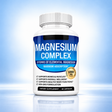
Alurevia Magnesium Complex provides 500mg elemental magnesium per capsule. That is above the adult supplemental upper limit of 350mg/day. The product page states this clearly.
Do not combine it with other magnesium-containing supplements simply to increase the total dose. Speak with a healthcare professional about whether the product and dose are appropriate for you, especially if you have kidney disease, take prescription medicines, are pregnant or nursing, or use other magnesium products.
For more on what the number on a label actually refers to, see magnesium 500mg explained. For safety detail, see magnesium side effects and safety.
Food magnesium and supplemental magnesium are treated differently
The 350mg upper limit does not include magnesium naturally found in foods. Food sources are therefore not capped in the same way in the NIH guidance.
Frequently asked questions
Is 400mg of magnesium per day too much?
It depends on whether the amount comes from food, supplements or both, as well as individual circumstances. The adult upper limit specifically for magnesium from supplements is 350mg/day. Seek professional advice before regularly exceeding it.
Is 500mg of magnesium a high supplemental dose?
Yes. 500mg of elemental magnesium from a supplement is above the adult supplemental upper limit of 350mg/day.
Does the Daily Value equal the upper limit?
No. The Daily Value and the supplemental upper limit serve different purposes. The Daily Value is used for nutrition labelling; the upper limit is a safety reference for supplemental intake.
Why is the upper limit lower than the RDA?
Because they measure different sources. The RDA counts magnesium from all sources, mostly food. The 350mg upper limit applies only to supplements and medications, where magnesium arrives as a concentrated dose and gastrointestinal effects become more likely.
How much magnesium do I actually get from food?
It varies considerably with diet. Seeds, nuts, leafy greens, legumes and whole grains are the densest common sources. Estimating your typical intake from food first is a more useful starting point than choosing a supplement dose in isolation.
Does the RDA change with age?
Yes, though it plateaus in adulthood. Adult male RDAs rise from 400mg in the 19–30 range to 420mg from 31 onwards, and adult female RDAs from 310mg to 320mg across the same transition.
Alurevia Magnesium Complex: 500mg elemental magnesium, one capsule per day, 90 capsules. $35 one-time or $31.50 every 3 months. See the full label and safety information →
Source
National Institutes of Health, Office of Dietary Supplements: Magnesium Fact Sheet for Health Professionals.
This article is general educational information and is not medical advice. These statements have not been evaluated by the Food and Drug Administration. This product is not intended to diagnose, treat, cure, or prevent any disease.