

Magnesium 500mg Explained: Elemental Magnesium, Dose & Label Meaning
What does 500mg magnesium really mean? Learn the difference between compound weight and elemental magnesium, serving size, Daily Value and supplemental safety limits.

Quick answer
"Magnesium 500mg" means 500mg of actual magnesium only when the label says elemental magnesium, which is the "Magnesium" line on a US Supplement Facts panel. If 500mg is the weight of a compound, the real magnesium is far lower: about 300mg for magnesium oxide and about 70mg for magnesium glycinate. 500mg elemental is 119% of the Daily Value and above the 350mg adult supplemental upper limit.
The most important question about any "500mg" label is what the 500mg refers to: elemental magnesium, meaning the magnesium itself, or the total weight of a magnesium compound.
Elemental magnesium vs compound weight
Magnesium supplements contain compounds such as magnesium oxide, glycinate or citrate. Each compound contains magnesium plus another component. The total compound weight is therefore larger than the amount of elemental magnesium it supplies.
For accurate comparison, use the magnesium amount in the Supplement Facts panel.
How much elemental magnesium each form actually contains
The proportion of elemental magnesium in a compound is fixed by chemistry, and you can calculate it from molecular weight. These are the approximate figures for common forms:
| Form | Approx. elemental magnesium | 1,000mg of compound supplies roughly |
|---|---|---|
| Magnesium oxide | ~60% | ~600mg |
| Magnesium carbonate | ~29% | ~290mg |
| Magnesium citrate | ~16% | ~160mg |
| Magnesium malate | ~15% | ~150mg |
| Magnesium glycinate (bisglycinate) | ~14% | ~140mg |
| Magnesium chloride (hexahydrate) | ~12% | ~120mg |
| Magnesium lactate | ~12% | ~120mg |
| Magnesium taurate | ~9% | ~90mg |
Figures are approximate and derived from molecular weight. Hydrated and buffered versions of the same compound can differ, which is another reason to read the panel rather than assume.
A worked example
Two labels can both say “500mg magnesium” and deliver very different amounts:
- A label stating 500mg magnesium oxide supplies roughly 300mg elemental magnesium.
- A label stating 500mg magnesium glycinate supplies roughly 70mg elemental magnesium.
- A label stating 500mg elemental magnesium supplies exactly that, whatever compound weight was needed to reach it.
The difference between the first and second example is more than fourfold, from the same headline number.
What does 500mg elemental magnesium mean?
It means the labelled serving provides 500mg of magnesium itself, regardless of how much total magnesium-compound material was required to supply it.
On a US Supplement Facts panel, 500mg elemental magnesium corresponds to 119% of the current 420mg Daily Value.
Why high elemental content and good tolerability pull in opposite directions
There is a trade-off worth understanding. Magnesium oxide carries the highest proportion of elemental magnesium of the common forms, which makes it an efficient way to reach a stated number without an enormous capsule. It is also the form most commonly associated with gastrointestinal effects at higher intakes.
Forms such as glycinate carry far less elemental magnesium per gram, so reaching the same number requires considerably more material, but they are often better tolerated.
This is why some products combine several forms rather than relying on one. It is a formulation trade-off, not a ranking, and no single form is universally best. For a closer look at that comparison, see magnesium oxide vs magnesium glycinate.
Is 500mg supplemental magnesium a high amount?
Yes. The Food and Nutrition Board sets the adult tolerable upper intake level for magnesium from supplements at 350mg/day, excluding magnesium naturally present in food. A 500mg elemental-magnesium supplement is above that reference level.
That does not mean a product should be self-prescribed or that more is better. Higher supplemental intakes can increase the likelihood of gastrointestinal effects, and individual suitability should be discussed with a healthcare professional.
How to read a Supplement Facts panel
- Find the serving size first. Every number on the panel describes one serving, and a serving may be one capsule or four.
- Find the magnesium line. US panels state the nutrient, so the number beside “Magnesium” is elemental magnesium.
- Check the %DV. It is calculated against the 420mg Daily Value and is a quick sanity check on the milligram figure.
- Read the ingredient list below the panel. Forms are listed in descending order by weight, so the first-named form is the largest contributor.
- Divide by days. Capsules per bottle divided by capsules per day gives the real days of supply, which is the only fair basis for comparing cost.
How Alurevia labels its 500mg
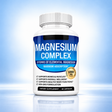
Alurevia Magnesium Complex states 500mg elemental magnesium per one-capsule serving. It is supplied from eight named forms, with magnesium oxide listed first as the primary source.
Each bottle contains 90 capsules, so the labelled one-capsule-per-day use equals a 90-day supply.
How to compare a “500mg” product with another magnesium product
- Check whether the number is elemental magnesium or compound weight.
- Check how many capsules make one serving.
- Look at the magnesium forms and ingredient order.
- Compare days of supply and cost per day.
- Read the safety directions before use.
- Compare cost per 100mg of elemental magnesium, not just bottle price. See what is elemental magnesium for the method.
500MG ELEMENTAL MAGNESIUM · ONE CAPSULE · 90-DAY SUPPLY
$35 one-time or $31.50 every 3 months with Subscribe & Save. Save $3.50 on every 90-day delivery.
Frequently asked questions
Is 500mg magnesium the same in every supplement?
No. Some labels refer to the weight of a magnesium compound while others state elemental magnesium. Use the Supplement Facts panel to compare products.
What percentage of the Daily Value is 500mg magnesium?
500mg elemental magnesium is approximately 119% of the 420mg Daily Value used on US labels.
Is more elemental magnesium always better?
No. Higher dose is not automatically better and may increase side effects. The appropriate amount depends on individual circumstances.
How much elemental magnesium is in magnesium glycinate?
Magnesium bisglycinate contains roughly 14% elemental magnesium by weight, so about 1,000mg of the compound supplies around 140mg of magnesium itself. Always confirm against the Supplement Facts panel, since buffered versions differ.
Why would a product use magnesium oxide at all?
Oxide carries the highest proportion of elemental magnesium of the common forms, so it reaches a stated milligram figure with less material. Its tolerability at higher intakes is the trade-off, which is why it often appears alongside other forms rather than alone.
Does a higher %DV mean a better product?
No. The %DV describes quantity against a reference figure, not quality, absorption or suitability. A number above 100% simply means the serving exceeds the Daily Value, and for supplemental magnesium that figure sits above the 350mg upper intake level.
Source
National Institutes of Health, Office of Dietary Supplements: Magnesium Fact Sheet for Health Professionals.
This article is general education and is not medical advice. These statements have not been evaluated by the Food and Drug Administration. This product is not intended to diagnose, treat, cure, or prevent any disease.


