

Are Premium Magnesium Supplements Worth the Extra Cost?
A higher price is worth paying when it buys something you can verify on the label. Here is how to tell, with a two-minute cost-per-milligram method.

Quick answer
Sometimes. A premium magnesium supplement is worth the extra cost when the price buys something you can verify: more elemental magnesium per serving, a specific form you have chosen for a reason, fewer capsules per day, or independent testing you can look up. It is not worth it when the extra money only buys packaging, adjectives or a longer ingredient list. Compare cost per day and cost per 100mg of elemental magnesium before deciding.
Magnesium supplements range from a few cents to more than a dollar a day. The expensive ones are not always better, and the cheap ones are not always a bargain. The difference usually comes down to a handful of factors you can check on the label in a couple of minutes.
What actually drives the price of a magnesium supplement
| Price driver | Why it costs more | Can you verify it? |
|---|---|---|
| Form of magnesium | Forms like glycinate contain less magnesium per gram than oxide, so more raw material is needed for the same dose | Yes: ingredient list |
| Elemental magnesium per serving | A higher dose uses more ingredient | Yes: Supplement Facts panel |
| Capsules per serving | Fitting a dose into fewer capsules can need denser ingredients | Yes: serving size |
| Independent testing | Certification and batch testing cost money | Yes, if the certifier or lab is named |
| Extra ingredients | Added vitamins or botanicals add cost | Yes, but check the amounts |
| Brand, packaging and marketing | Advertising, influencer fees and retail margins | No, and it does not change what you take |
The form point matters most. Pure magnesium glycinate is only about 14% magnesium by weight, while magnesium oxide is about 60%. A glycinate product therefore needs roughly four times as much ingredient to deliver the same elemental magnesium, which is one honest reason glycinate products often cost more. For the full form-by-form figures, see what is elemental magnesium.
The two-minute value test
You need three numbers from each label: price, total capsules and elemental magnesium per serving.
- Cost per day = price ÷ number of days the bottle lasts (total capsules ÷ capsules per serving).
- Cost per 100mg of elemental magnesium = cost per day ÷ (elemental mg per serving ÷ 100).
- Ask what the difference buys. If one product costs more on both measures, look for a specific, verifiable reason on its label.
Worked example
These two products are illustrative, not real brands.
| Product A | Product B | |
|---|---|---|
| Price | $40.00 | $20.00 |
| Capsules per bottle | 120 | 120 |
| Serving | 2 capsules = 200mg elemental (glycinate) | 1 capsule = 250mg elemental (oxide) |
| Days per bottle | 60 | 120 |
| Cost per day | $0.67 | $0.17 |
| Cost per 100mg elemental | $0.33 | $0.07 |
Product A costs five times more per 100mg. That can still be a reasonable choice if you have a specific reason to want glycinate and it is independently tested. It is a poor choice if you assumed "premium" meant "more magnesium".
When paying more can make sense
- You want a specific form for a reason you understand, such as preferring glycinate, and the label shows how much of the dose comes from it.
- Digestive comfort matters to you. The NIH Office of Dietary Supplements notes that magnesium from supplements can cause diarrhea, cramping and nausea, and that some forms, including oxide, carbonate, chloride and gluconate, are more often linked to it. Some people find a different form easier, though research comparing forms directly is limited.
- You value independent testing and the brand names the certifier or shares a batch certificate of analysis.
- Fewer capsules per day make you more likely to take it consistently.
When a basic product is usually fine
- You want to top up a diet that is low in magnesium-rich foods, and you tolerate the form well.
- The premium option's extra cost comes from added ingredients you did not want.
- The label claims ("ultra", "advanced", "maximum") are not backed by anything specific you can check.
Red flags on expensive products
- A large front-label number with no Supplement Facts panel shown online.
- A long list of forms with no indication of how much each supplies.
- "Clinically proven" with no study named.
- "Third-party tested" with no laboratory or certification named.
For a full company-level check, use our 10-point brand evaluation checklist.
Where Alurevia sits
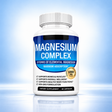
Alurevia Magnesium Complex combines eight named magnesium sources in one daily capsule. Magnesium oxide is listed first and is the primary source, which keeps the capsule count to one a day. It provides 500mg elemental magnesium, which is above the 350mg adult supplemental upper limit, so check suitability with a healthcare professional.
| One-time | Subscribe & Save | |
|---|---|---|
| Price | $35.00 / 90 days | $31.50 / 90 days |
| Cost per day | about $0.39 | $0.35 |
| Cost per 100mg elemental | about $0.08 | $0.07 |
90-DAY SUPPLY · SUBSCRIBE & SAVE 10%
- $35.00 one-time purchase
- $31.50 every 3 months with Subscribe & Save
- One capsule per day, 90 capsules per bottle
- Pause, skip or cancel anytime
Frequently asked questions
Are expensive magnesium supplements better?
Not automatically. A higher price is justified when it buys more elemental magnesium, a specific form, fewer capsules or verifiable testing. Compare cost per 100mg of elemental magnesium to see what you are actually paying for.
Why is magnesium glycinate more expensive than magnesium oxide?
Glycinate is about 14% magnesium by weight and oxide about 60%, so a glycinate product needs roughly four times as much ingredient to supply the same elemental dose.
How much should a good magnesium supplement cost per day?
There is no correct price, and prices vary widely between brands and forms. Cost per 100mg of elemental magnesium is a fairer comparison than price per bottle.
Is a cheap magnesium supplement a waste of money?
No, if it clearly states its elemental magnesium, uses a form you tolerate, and comes from a brand that passes basic transparency checks.
How do I calculate cost per 100mg of magnesium?
Divide the price by the number of days the bottle lasts to get cost per day. Then divide that by the elemental magnesium per serving, divided by 100.
Sources
National Institutes of Health, Office of Dietary Supplements: Magnesium Fact Sheet for Health Professionals.
This article is general education and is not medical advice. These statements have not been evaluated by the Food and Drug Administration. This product is not intended to diagnose, treat, cure, or prevent any disease. Follow the product label and speak with a healthcare professional for individual guidance.